

Build Now, Pay Later? The Hidden Cost of Skipping Construction Permits
April 22, 2026
Why Pre-Construction Is Non-Negotiable: A Real Cost Lesson for Developers and Homeowners
April 22, 2026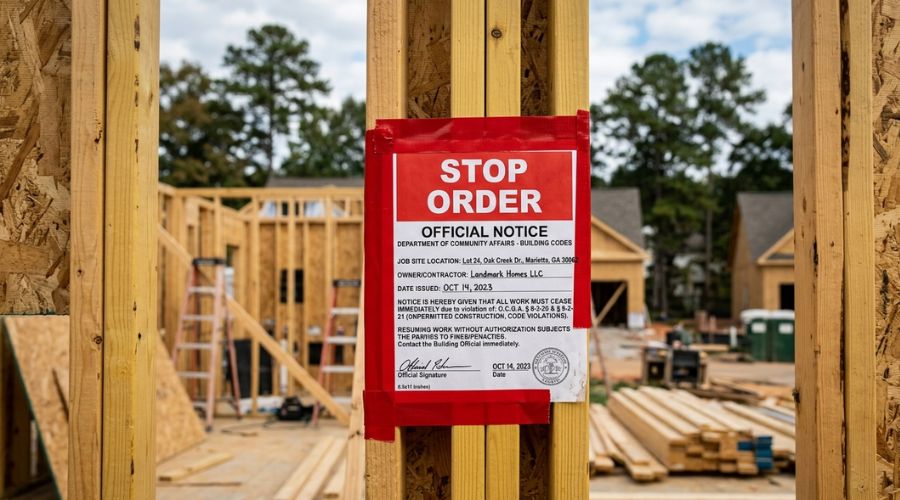
A construction crew shows up to your property one morning to find an official notice posted on-site: Stop Work Order. All activity must cease immediately. Your timeline just evaporated, your budget is now uncertain, and you're facing potential fines and legal complications.
For homeowners, builders, and investors in Georgia's residential construction market, a Stop Work Order (SWO) is one of the most disruptive situations you can encounter. But understanding how they work, and more importantly, how to avoid them, can protect your project, your investment, and your peace of mind.
What Is a Stop Work Order in Georgia?
A Stop Work Order is an official directive issued by local building officials or code enforcement when construction activity violates permitting requirements or building codes. Once issued, all work on the affected project must halt until the violation is corrected and the property is brought into compliance.
In Georgia, Stop Work Orders are typically issued when:
- Construction begins or continues without the required building permits
- Work doesn't align with approved construction plans on file with the jurisdiction
- The project violates local zoning ordinances, building codes, or safety requirements
The order remains in effect until the property owner or contractor resolves the underlying violation, submits corrected documentation, obtains necessary approvals, and receives official clearance to resume work.
Why Stop Work Orders Are Issued: The Most Common Triggers
Across Georgia's residential markets, from Atlanta suburbs to rural counties, certain violations trigger Stop Work Orders more frequently than others:
1. Starting Work Without Pulling Permits
This is the single most common cause of residential Stop Work Orders. Property owners or contractors begin construction before obtaining required building permits, often believing they can "save time" or avoid permit fees.
The reality: building officials discover unpermitted work through routine inspections, neighbor complaints, or aerial survey programs that many Georgia jurisdictions now use. Once discovered, work stops immediately.
2. Exceeding Zoning or Setback Limits
Every property has setback requirements, minimum distances structures must maintain from property lines, streets, and easements. Violating these restrictions, even by a few feet, can trigger a Stop Work Order.
Common scenarios include:
- Additions that encroach into required side or rear yard setbacks
- Accessory structures (sheds, garages) placed too close to property lines
- Front porches or covered entries that extend beyond allowable building envelopes
3. Not Following the Approved Site Plan
When construction deviates from approved plans, even with good intentions, it creates a compliance problem. Building officials compare work in progress against filed plans during inspections. Discrepancies result in Stop Work Orders.
This happens when contractors make "field changes" without submitting plan revisions, or when property owners request modifications after permits are issued but before approval is obtained.
4. Retaining Walls or Grading Without Proper Engineering
Georgia's varied topography means many residential projects involve site grading, retaining walls, or drainage modifications. These elements often require:
- Engineered designs stamped by a licensed professional engineer
- Separate grading permits beyond the standard building permit
- Erosion and sediment control plans
Constructing retaining walls over a certain height (typically 4 feet) without engineered plans is a frequent cause of Stop Work Orders, particularly in developments built on sloped lots.
5. Additions, Decks, and Remodels That Bypass Review
Many homeowners don't realize that exterior decks, room additions, garage conversions, and even some interior remodels require permits and inspections. Common assumptions that lead to Stop Work Orders:
- "It's just a deck, I don't need a permit" (you almost always do in Georgia)
- "I'm not changing the footprint, so it's not permitted work" (interior structural changes still require permits)
- "The previous owner did work without permits, so I can too" (building officials don't grandfather violations)
The Real Impact of a Stop Work Order
Beyond the obvious halt to construction, Stop Work Orders create cascading consequences:
Financial Impact
- Construction crews sit idle while still on payroll
- Equipment rental costs continue accruing
- Subcontractors move to other jobs, creating scheduling conflicts when work resumes
- Permit fees are now due plus penalty fees (often double or triple the standard amount)
- Engineering and design costs to prepare corrective documentation
- Extended carrying costs on construction loans
Timeline Disruption
- Projects can be delayed weeks or months depending on complexity
- Seasonal construction windows may be lost (particularly important for exterior work in Georgia's climate)
- Occupancy dates slip, affecting everything from school enrollment to lease obligations
Legal and Financial Risk
- Property may be unmarketable or uninsurable until violations are resolved
- Refinancing becomes impossible with open code violations
- Selling the property requires disclosure of violations, reducing value
- Repeated violations can result in daily fines until compliance is achieved
How to Resolve a Stop Work Order in Georgia
Here's the critical point that many property owners miss: a Stop Work Order is not the end of your project. With the right approach, properties can be brought back into compliance and construction can resume.
The resolution process typically involves:
1. Assess What Was Built vs. What Was:
Approved Document the current state of construction through photographs and measurements. If no approved plans exist (unpermitted work), document everything that's been built so far.
2. Prepare As-Built Drawings
For work that deviates from approved plans or was never permitted, you'll need professional as-built drawings showing current conditions. This usually requires:
- A licensed architect or designer to prepare plans
- A surveyor to verify property boundaries and setbacks
- In some cases, a structural engineer to evaluate existing work
3. Coordinate with Engineers and Design Professionals
Depending on the violation, you may need:
- Structural engineer review of framing, foundations, or retaining walls
- Civil engineer review of grading and drainage
- Architect review of code compliance for egress, fire separation, and accessibility
4. Submit Corrected Plans for Review
File permit applications with corrected plans that show how the work will comply with codes and zoning. This may include:
- Modifications to bring work into setback compliance
- Structural reinforcement if existing work doesn't meet code
- Alternative solutions that achieve code intent while preserving existing work
5. Schedule Required Inspections
Once plans are approved, schedule all required inspections, foundation, framing, mechanical, electrical, plumbing, and final. Work cannot resume until inspections are scheduled and the Stop Work Order is officially lifted.
6. Obtain Official Clearance
Only when building officials provide written clearance can work legally resume. Don't restart construction based on verbal assurances or assumptions.
Prevention: The Compliance-First Approach
Every Stop Work Order situation I've encountered across Georgia had one thing in common: it could have been prevented with proper planning before construction began.
Always Plan Before You Build
The most effective way to avoid Stop Work Orders is straightforward:
- Research permit requirements with your local building department before starting any work
- Hire licensed design professionals (architects, engineers) for anything beyond minor repairs
- Submit complete permit applications with detailed plans that comply with codes
- Wait for permit approval before beginning construction, no exceptions
- Schedule all required inspections as work progresses
- Build according to approved plans or submit revisions before making changes
When to Involve Pre-Construction Professionals
For any residential project beyond basic maintenance, professional pre-construction planning protects you from Stop Work Orders and other compliance issues:
- New home construction: Requires full architectural and engineering coordination
- Room additions and major remodels: Need design review for structural, mechanical, and code compliance
- Decks, porches, and accessory structures: Require setback analysis and structural design
- Site work and retaining walls: Need civil engineering and grading permits
- Any work approaching property lines: Requires survey and setback verification
Georgia-Specific Considerations
Different Georgia jurisdictions have varying requirements and enforcement approaches:
Metro Atlanta Counties
Fulton, DeKalb, Cobb, and Gwinnett counties have robust building departments with active code enforcement. Expect:
- Strict permit enforcement with regular inspections
- Aerial survey programs that identify unpermitted work
- Significant penalty fees for violations
Suburban and Rural Counties
Smaller jurisdictions may have less frequent inspections, but violations are still enforced:
- Some counties require permits for smaller projects than metro areas
- Rural areas often have more lenient setback requirements but stricter septic and well regulations
- Building departments may be understaffed, leading to longer review times
Incorporated Cities
Cities within counties often have their own building departments and requirements:
- May have stricter standards than surrounding county
- Historic districts add additional review layers
- Tree ordinances and environmental regulations vary significantly
Protecting Your Investment and Timeline
At the end of the day, compliance isn't just about following rules, it's about protecting your investment and keeping your project moving forward.
Stop Work Orders don't just delay construction; they:
- Damage relationships with contractors and subcontractors
- Create uncertainty that affects financing and insurance
- Reduce property value until resolved
- Generate stress and frustration for everyone involved
The solution is simple: treat permitting and code compliance as non-negotiable project requirements, not obstacles to work around.
Whether you're a homeowner planning a kitchen remodel, an investor developing rental properties, or a builder managing multiple residential projects across Georgia, understanding Stop Work Orders, and more importantly, how to avoid them, is essential knowledge.
Always plan before you build. It saves more than just time, it keeps your project safe, legal, and moving forward.