

The Power of Pre-Construction Planning: Saving Time, Money, and Headaches Before You Build
April 25, 2025
Stop Work Orders in Georgia Residential Construction: What You Need to Know
April 22, 2026
Starting construction without proper permits might seem like a shortcut that saves time and money. In reality, it's often an expensive detour that costs developers far more than the permitting process ever would have.
The appeal is understandable: permits take time, require documentation, and involve fees. When project timelines are tight and investors are eager to see progress, the temptation to "just get started" can be strong. But this decision almost always backfires, and the consequences extend well beyond simple fines.
The Real Cost of Unpermitted Construction
I've seen it happen across multiple projects, and the pattern is remarkably consistent. What starts as an attempt to save a few weeks inevitably spirals into:
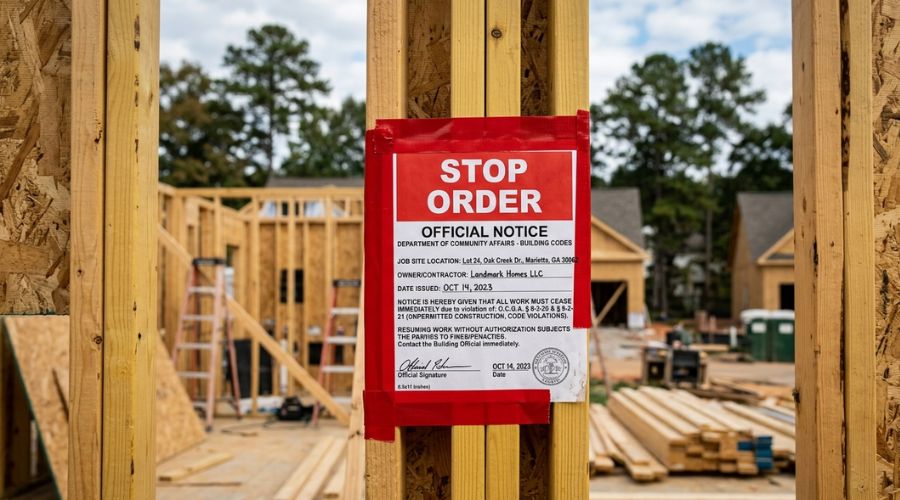
- Stop Work Orders: Once building officials discover unpermitted work, construction grinds to a halt. Your crew sits idle. Equipment rentals continue. Subcontractors move to other jobs. The momentum you were trying to build evaporates overnight.
- Fines and Code Violations: Municipal fines for unpermitted work can be substantial, often calculated as multiples of the original permit fees. In some jurisdictions, penalties compound daily until compliance is achieved. What would've been a few thousand dollars in permit fees becomes tens of thousands in penalties.
- Required Redesigns and Re-Inspections: The worst-case scenario, and one that happens more often than developers expect, is discovering that unpermitted work doesn't meet code requirements. Walls get opened. Systems get torn out. Work gets redone. Then comes the inspection process you were trying to avoid in the first place, except now you're doing it twice.
- Project Delays That Cascade: Every day of delay affects everyone downstream. Finish contractors wait. Tenant improvements stall. Occupancy dates slip. Lease commencement gets pushed back. The financial impact multiplies as carrying costs accumulate and revenue timelines shift.
Why Developers Skip Permits (And Why They Shouldn't)
The reasons for bypassing permits usually fall into a few categories:
- Timeline Pressure: Investors want to see progress, and the permitting process feels like bureaucratic delay. But the reality is that permitted work progresses faster overall because it doesn't face stop-work interruptions.
- Cost Concerns: Permit fees seem like an unnecessary expense. Yet those fees are negligible compared to the cost of fines, rework, and extended timelines when violations are discovered.
- Complexity Avoidance: The permitting process can be complex, especially in jurisdictions with strict requirements. But that complexity exists for a reason, building codes protect safety and property values. Avoiding the process doesn't eliminate the requirements.
- Previous "Success": Some developers have completed small projects without permits and faced no consequences. This creates false confidence. Building officials may not catch every violation immediately, but unpermitted work becomes a massive liability during property sales, refinancing, or insurance claims.
The Path Back to Compliance
Here's the critical point that many developers miss: projects can be brought back into compliance. It's not ideal, and it's more expensive than doing it right from the start, but it's possible.
Getting a project back on track requires:
- Honest assessment of what's been built and how it deviates from code requirements
- Collaboration between architects and engineers to document as-built conditions and design any necessary corrections
- Permit professionals who understand the jurisdiction and can navigate the compliance process efficiently
- A realistic timeline and budget that accounts for inspections, potential rework, and fees
The teams that handle this successfully don't make excuses or try to hide what happened. They engage with building officials transparently, demonstrate commitment to compliance, and execute the corrective work professionally.
Building with Foresight: The Pre-Construction Alternative
The antidote to permit problems is simple: comprehensive pre-construction planning and permitting strategy.
This means:
- Understanding jurisdiction requirements before any work begins
- Building permitting timelines into project schedules realistically
- Preparing complete, accurate permit applications that move through review efficiently
- Establishing relationships with building officials so questions get answered quickly
- Coordinating design and engineering teams to ensure code compliance from the start
When permitting is treated as an integral part of project planning rather than an obstacle to work around, projects move forward with confidence. There are no surprise stop-work orders, no scrambling to correct violations, and no explaining to investors why the project is suddenly stalled.
Build by the Book, Protect Your Investment
If you're currently facing a stop work order or trying to untangle a permit issue, now is the time to course correct. The longer violations remain unresolved, the more expensive and complex the solution becomes.
And if you're planning a new project, make permitting strategy a cornerstone of your pre-construction process. The upfront investment in doing things right protects everything downstream: your timeline, your budget, your reputation, and ultimately your return on investment.
In real estate development, there are no real shortcuts, only different timelines for when you pay the cost. Proper permitting means paying reasonable fees upfront for smooth execution. Skipping permits means paying much larger costs later, when you have the least control over timing and outcomes. Build with foresight.